
Payload Systems
The in-house manufacturing workflow, material choices, and payload-release mechanisms that carry and deliver ASCENT-1's competition payload.
Overview
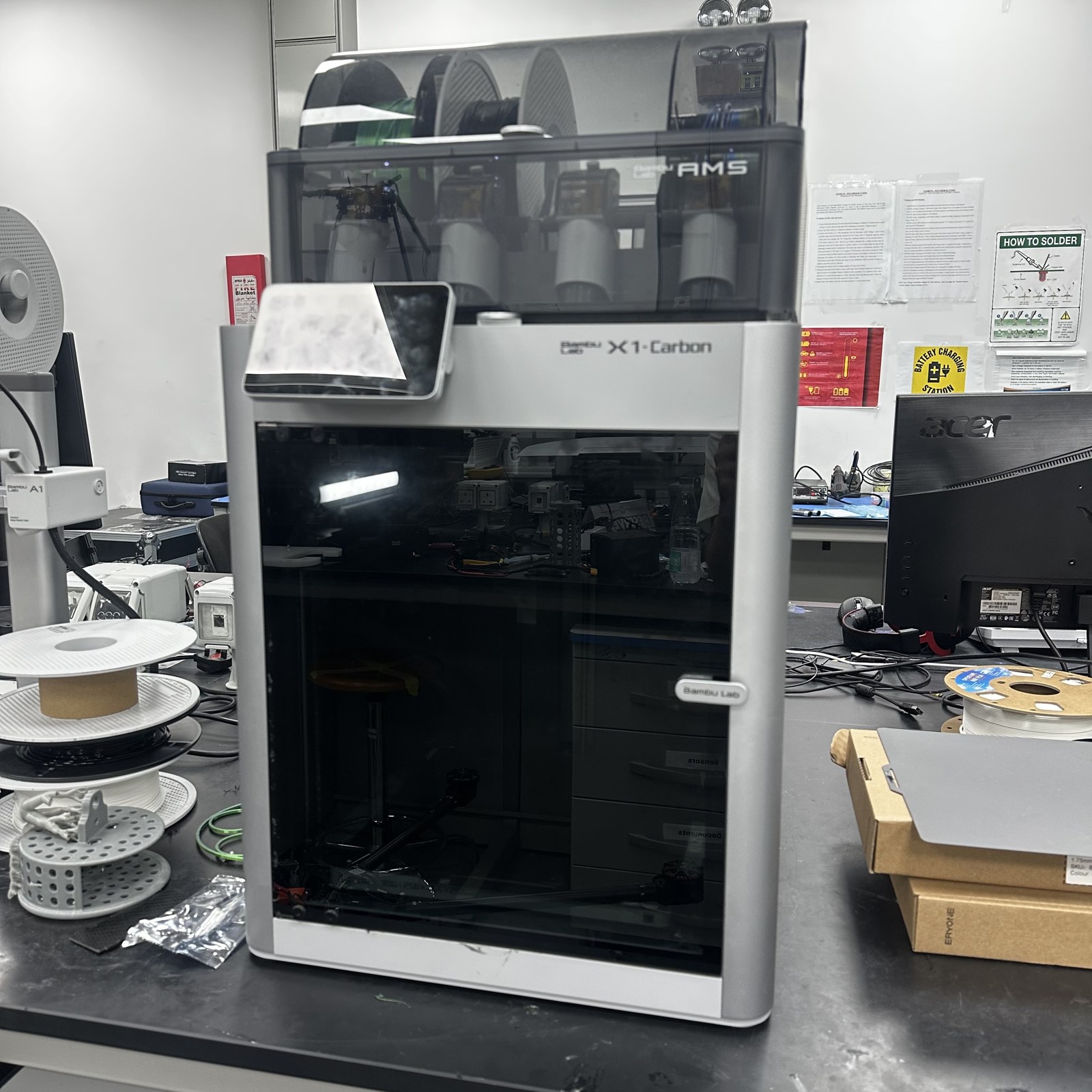
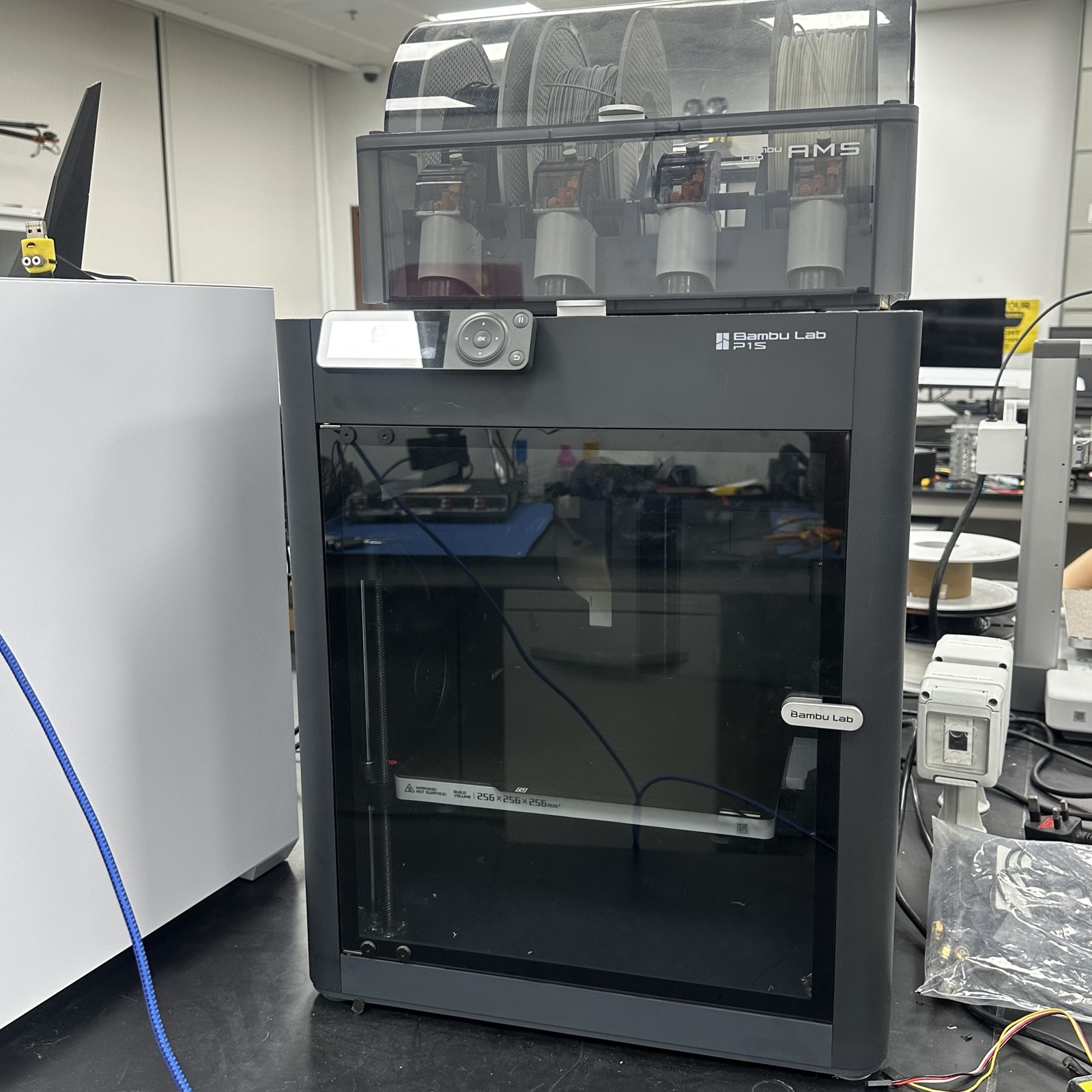
The Payload Systems subsystem covers everything ASCENT-1 carries and drops, and much of the structure that holds it. A large part of the aircraft's structure is produced in-house on three Bambu Lab 3D printers, which lets the team prototype a part in an afternoon, print it overnight, and test-fit it the next morning.
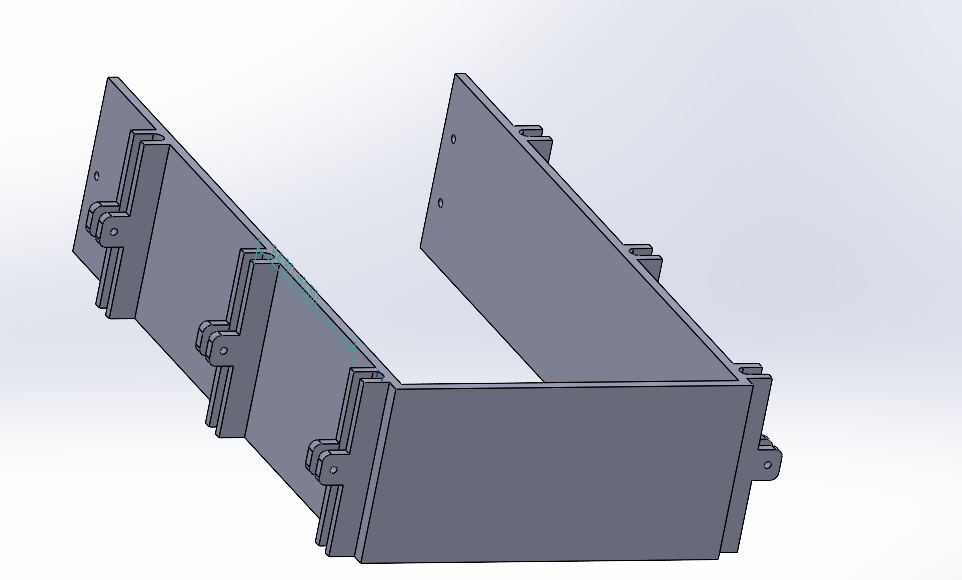
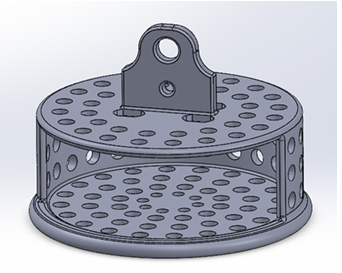
The subsystem's headline deliverables are the payload holders — a water-bottle holder and a beacon holder — each refined across three design revisions before being cleared for testing.
Engineering Objectives
- Manufacture flight-grade structural parts in-house with fast iteration.
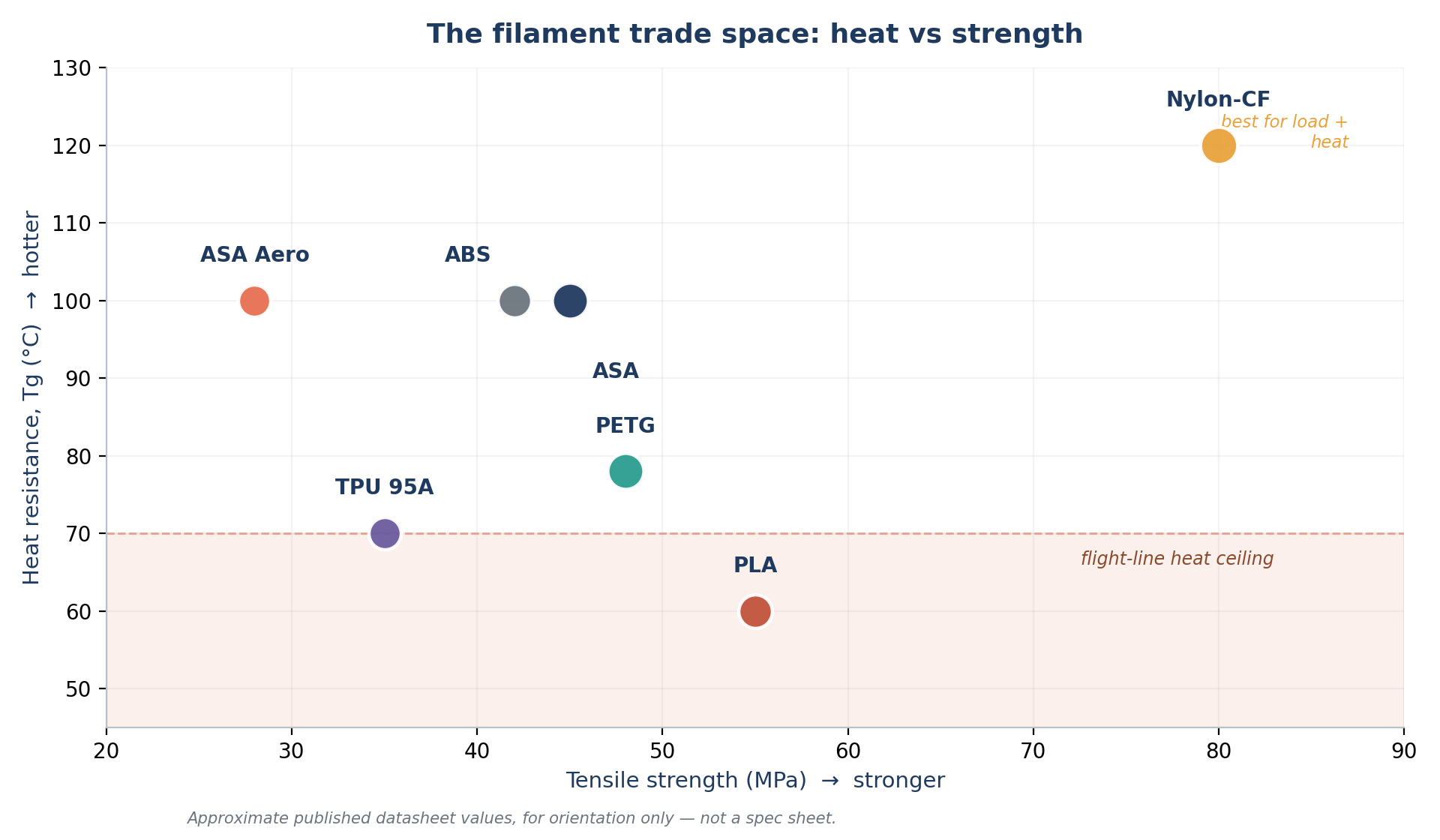
- Choose the right filament for each part based on heat, weight, and load.
- Carry and release the competition payload reliably and on target.
- Minimize payload-system weight so more of the mass budget goes to endurance.
Major Components
Bambu Lab printer fleet
An enclosed X1-Carbon and P1S for flight parts plus an open-frame A1 for rapid prototypes, with multi-spool AMS units for overnight jobs.
Flight-grade filaments
PETG for structural mounts, ASA for sun-exposed parts, ASA Aero where weight dominates, TPU for flexible parts, with carbon-fibre nylon under evaluation.
Water-bottle holder (V3)
The delivery-payload holder, refined across three revisions and approved for active testing.
Beacon holder (V3)
The beacon-payload holder, redesigned across three versions for lower bulk and better survivability.
Payload-release mechanism
An in-house release, on its own power domain, that carries and drops the payload.
Material selection framework
A heat/weight/load trade study that assigns each part its filament.
Integration with ASCENT-1
The payload structures mount to the aircraft airframe and interface with the aircraft's separate 12 V payload power. The release mechanism is commanded during the COMMIT and LOITER phases of the mission, once the Autonomous Flight subsystem has flown the aircraft to the confirmed target.
Keeping payload actuation on its own power domain means a delivery never draws current away from flight-critical systems.
Subsystem Architecture
Engineering Gallery
Technical Highlights
In-house iteration
Design in the afternoon, print overnight, test-fit next morning — being wrong costs grams of plastic, not a week.
Material discipline
Nothing that flies is printed in PLA; each part's filament is matched to its heat, weight, and load.
Three-revision holders
Both payload holders converged through V1 → V3 on alignment, weight, and survivability.
Isolated payload power
A dedicated 12 V battery drives the release so delivery never loads the flight pack.
- Qualify carbon-fibre nylon for the highest-load brackets.
- Instrument the release mechanism to confirm drop events in telemetry.
- Reduce holder mass further once the final payload geometry is frozen.