
Building the Tent Detection Dataset
As we built out the perception pipeline, one gap kept coming up: there simply were not many aerial datasets of tents that matched the SUAS mission environment. Most public imagery is shot from the ground or at angles nothing like a nadir camera at competition altitude — where a tent is a small object sitting against grass, dirt, or track. Rather than fight an ill-fitting dataset, the team decided to collect its own.
We bought a set of representative tents and ran dedicated field data-collection sessions. Imagery was captured with a DJI Mini 4 Pro, flown at several altitudes — including around 150 ft, to closely match the operational altitude we expect during the AUVSI SUAS competition. Because the competition does not guarantee a fixed tent location, we deliberately repositioned the tents throughout the campaign instead of filming the same configuration over and over. That gave the dataset a real range of viewpoints, orientations, backgrounds, and scene layouts — tents near the goal, at the center circle, beside the running track, and against the surrounding trees and dirt.
Back in the lab, the collected videos were converted into individual image frames, and every frame was manually annotated in CVAT — drawing a bounding box around each tent to produce the labels a detector learns from. The result is a custom, competition-representative dataset that became one of the foundations for training the team's YOLO object-detection model. How that model performs is a story for a later update; this one is about getting the data right first.
Figures & Diagrams
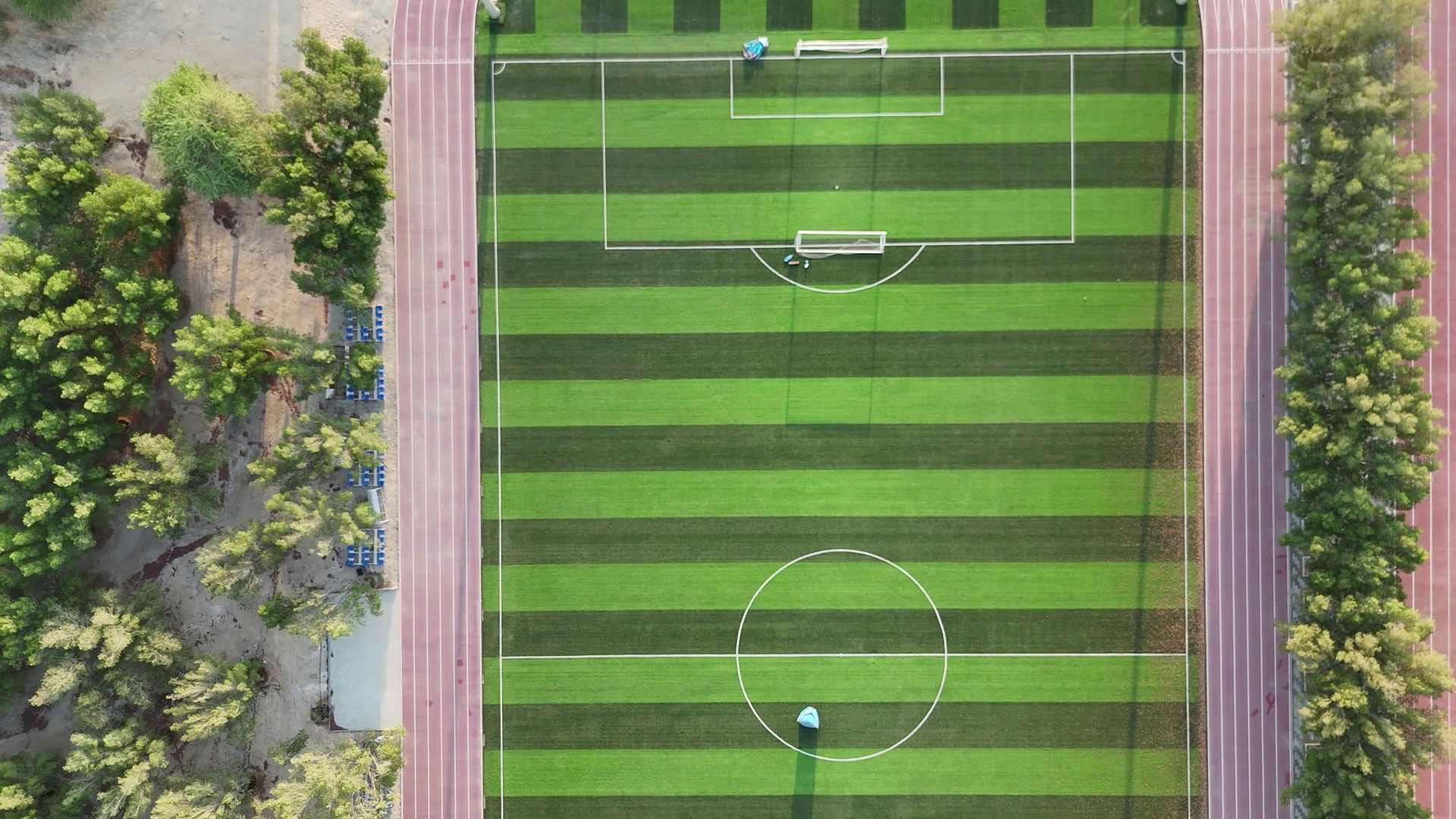
Field Data Collection
Collecting aerial imagery of representative tents under competition-like flight conditions.
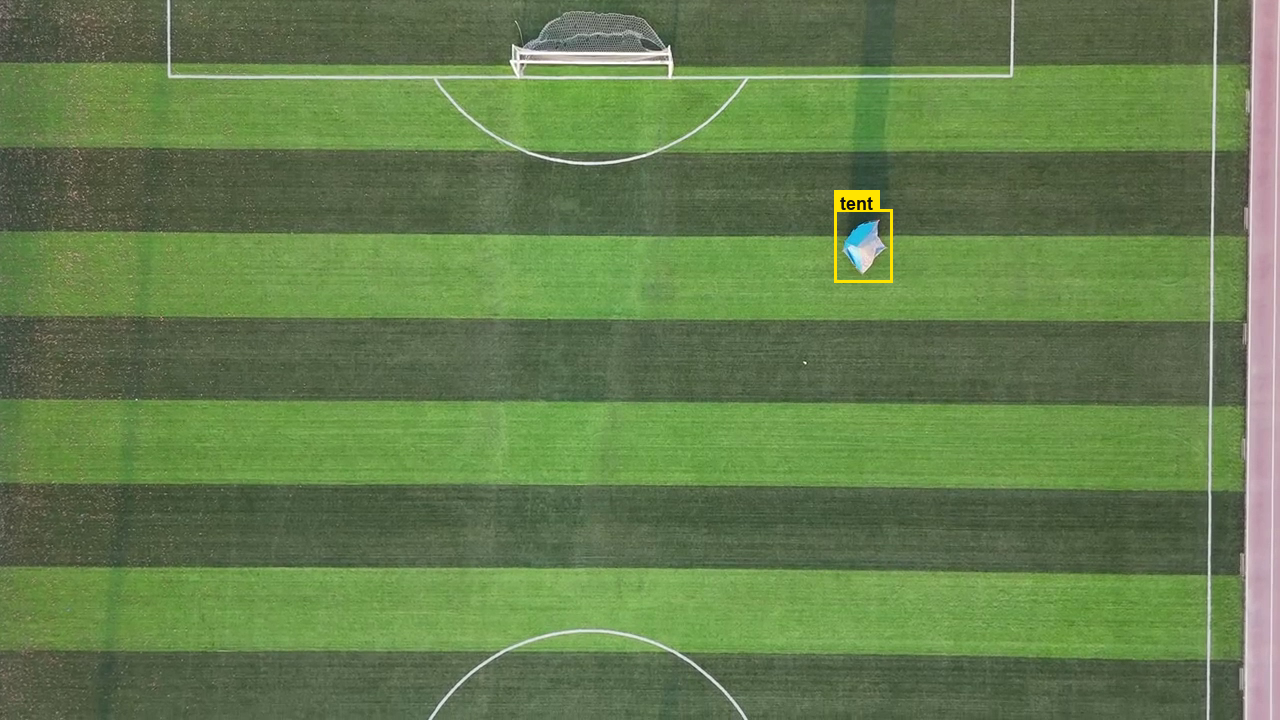
Annotated Dataset Example
Example of manually annotated training imagery prepared for the YOLO perception pipeline.