
The Search State Machine
With a trustworthy link and a detector that looks at the ground eight times a second, this milestone was the brain that sits on top: the logic that plans the search, decides when a detection is real, and works out where on Earth the object is. The search area arrives as four surveyed GPS corners, and the planner covers it with a lawnmower (boustrophedon) sweep — swath width from the camera's field of view at 150 feet, adjacent lanes overlapped by 30% — uploaded as an ordinary ArduPilot AUTO mission that ends in an RTL item, so even if the companion computer dies mid-sweep the mission itself lands safely.
The tuning decision that mattered most was yaw. By default ArduCopter turns the nose into each new lane, which bleeds ground
speed at every turn and swings the camera through 180° twice per lane pair. We set WP_YAW_BEHAVIOR=0 so the
copter holds a fixed heading and translates on roll and pitch instead — lane turns become pure reversals, the sweep
keeps its 8 m/s speed, and every detection's pixel-to-ground math sees a near-constant orientation. We watched the
heading trace stay flat through six lane turns in simulation before trusting it on the airframe.
A single YOLO hit is an opinion, not a fact — sun glint or one aliased frame can produce a confident false positive, and chasing a phantom target burns minutes of the mission window. So SEARCH feeds every frame's result, hits and misses alike, into a debouncer that needs 3 hits within the last 5 frames (at ≥ 0.5 confidence) before declaring the object confirmed — under a second at our detection rate, while a lone spurious hit dies quietly. In parallel, each detection is georeferenced: the pixel becomes a ray, the ray is rotated by the aircraft's attitude at the frame's timestamp, and its intersection with the ground gives a latitude/longitude sample. The one number that makes this work is time — the camera and the pose buffer share one monotonic clock, because 100 ms of mismatch drags every sample 0.8 m along-track, a bias no amount of averaging can remove.
Figures & Diagrams
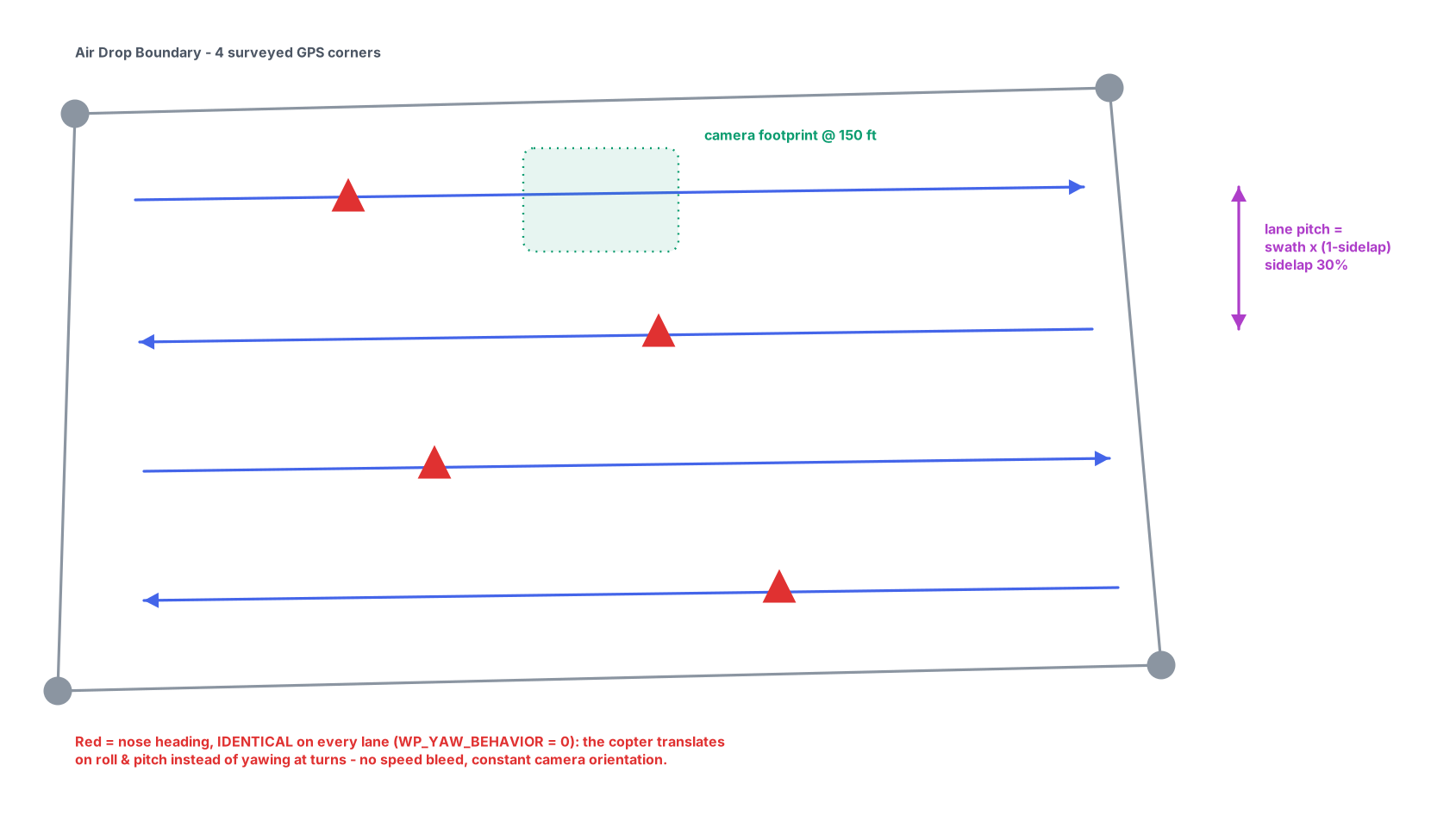
Lawnmower Coverage
Coverage of the boundary quadrilateral with a fixed nose heading — lane pitch is swath × (1 − sidelap), and the heading markers never rotate.
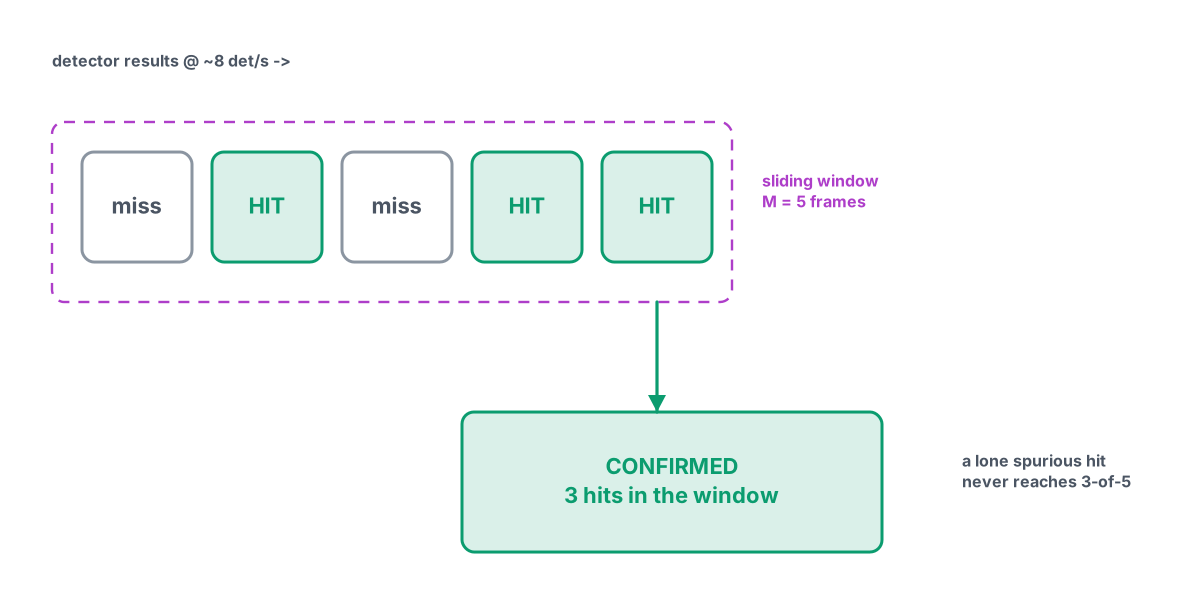
3-of-5 Debounce
Hits and misses both feed a sliding window of the last 5 frames; confirmation needs 3 hits — under a second at ~8 detections/s.
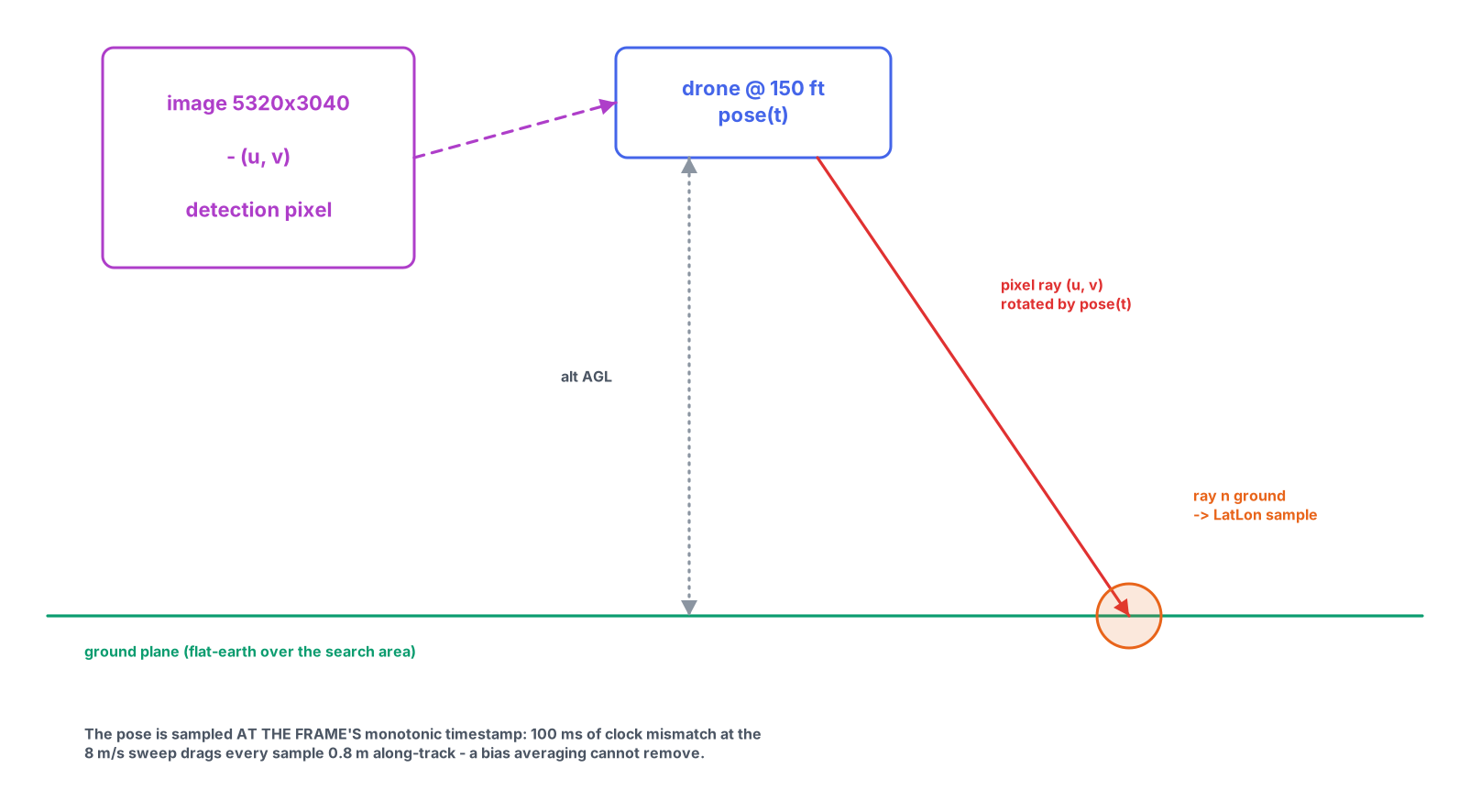
Pixel-to-Ground Georeferencing
The pose is sampled at the frame's monotonic timestamp before the pixel ray is cast to its intersection with the ground plane.