
Checking Our Power Model Against Real Flights
This week's milestone was less about hardware and more about trust: we finally put our power model up against real flight data. Earlier in development we built a model that predicts how much battery each part of a mission should consume, and the only honest way to know whether it works is to fly, measure what actually came out of the pack, and compare the two.
The result was encouraging. Plotting the predicted energy against the actual milliamp-hours drawn in each flight segment, the points sit close to the ideal one-to-one line across the whole range we tested. Where it does drift, the model tends to predict slightly high on the longest segments — which is the safe direction to be wrong in. It isn't perfect, but it's close enough to plan around.
That matters because a power model you can trust changes how we fly. Instead of padding every mission with guesswork reserve, we can estimate up front how much energy a given route and payload will need, plan tighter and more confident missions, and eventually feed that same estimate into the aircraft's autonomy so it can judge its own remaining endurance in the air. The next step is simply more flights — every one we log makes the model a little sharper.
Figures & Diagrams
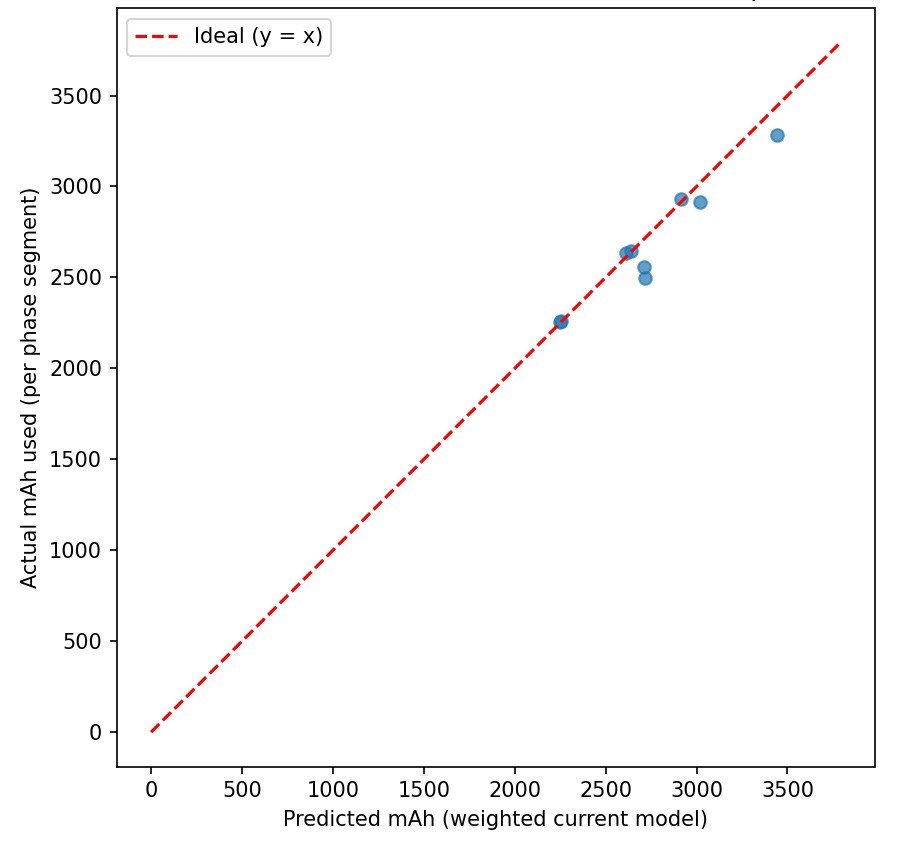
Prediction vs Actual
Predicted versus actual battery usage for each flight segment; points close to the dashed ideal line show the model tracking real consumption.
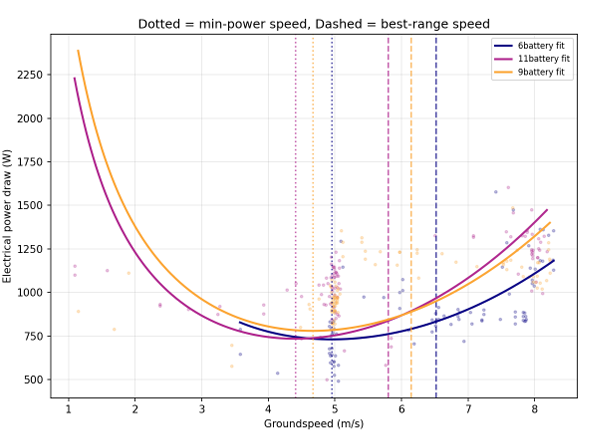
Power Draw vs Ground Speed
Relationship between power draw and ground speed, one of the inputs behind the energy model.