
Braking a Free Fall: The Rotary-Damper Descent Stage
A payload that simply drops from 50 metres arrives far too fast to hand to a person. The whole point of the passive drop mechanism lives in its second stage: it has to bleed off that speed without a motor and without any active control, and stay light while doing it. This update is about how that braking stage actually works.
The payload line is split into two sections. A free-fall spool pays out the first section with low resistance, so the payload gets clear of the aircraft quickly. When the second section begins to deploy, it drives a braked pulley that is coupled to an FRT-G2-600 rotary damper. The damper resists the pulley’s rotation, and that resistance is what pulls the descent speed down for the final approach to the receiver. The braked pulley has an effective diameter of 28 mm — a 14 mm radius — which we confirmed directly from the SolidWorks model before printing.
It would be tidy to credit all the braking to the damper, but that would not be honest engineering. The real stopping force is the sum of many things: pulley and bearing friction, line-guide friction, spool resistance, the payload’s own aerodynamic drag, a little line elasticity, and the way the braked stage engages progressively rather than all at once. Because so much of the behaviour comes from the assembly as a whole, we don’t rely on the damper’s nominal torque figure. We evaluate the complete mechanism by physically dropping it.
With the damper selected, the braked pulley sized, and the free-fall spool built, the descent-control hardware was finished — the milestone that set up the drop-testing campaign, where the mechanism finally had to prove it slows the payload to a speed a person can safely receive.
Figures & Diagrams
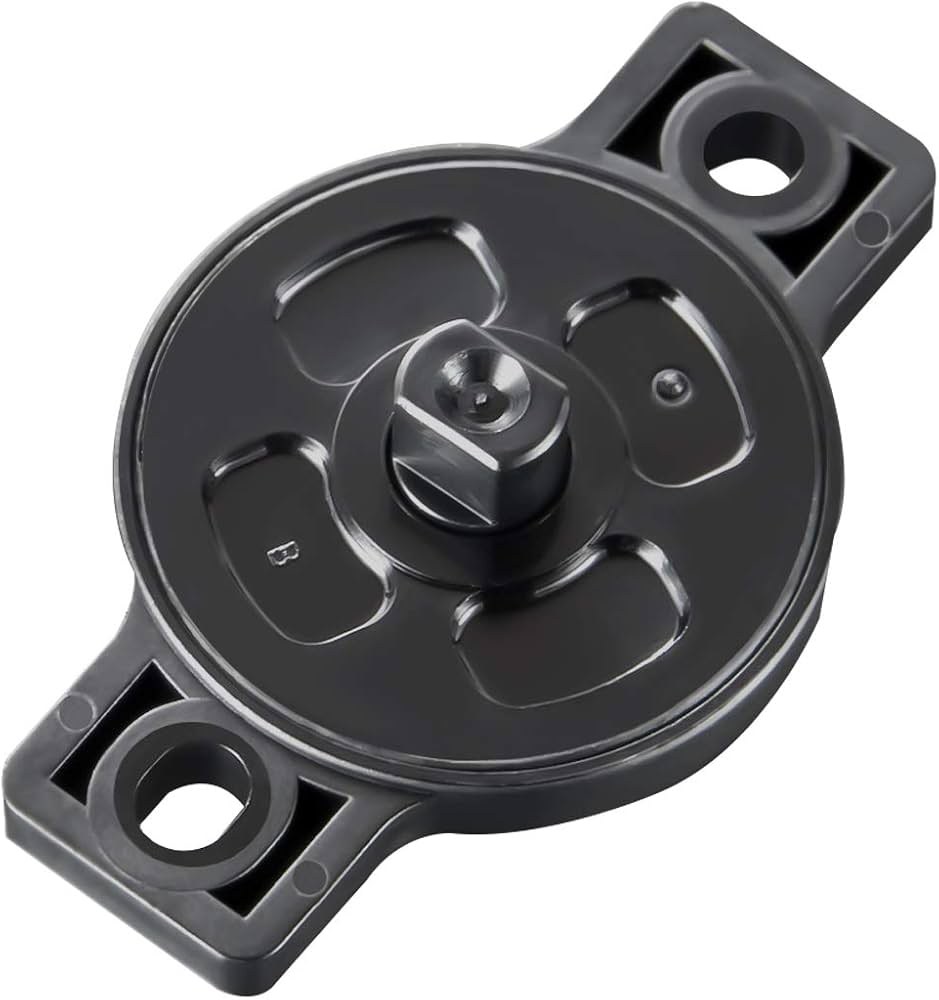
FRT-G2-600 Rotary Damper
The passive brake. Its output shaft resists rotation, so coupling it to the braked pulley slows the payload during the second stage.
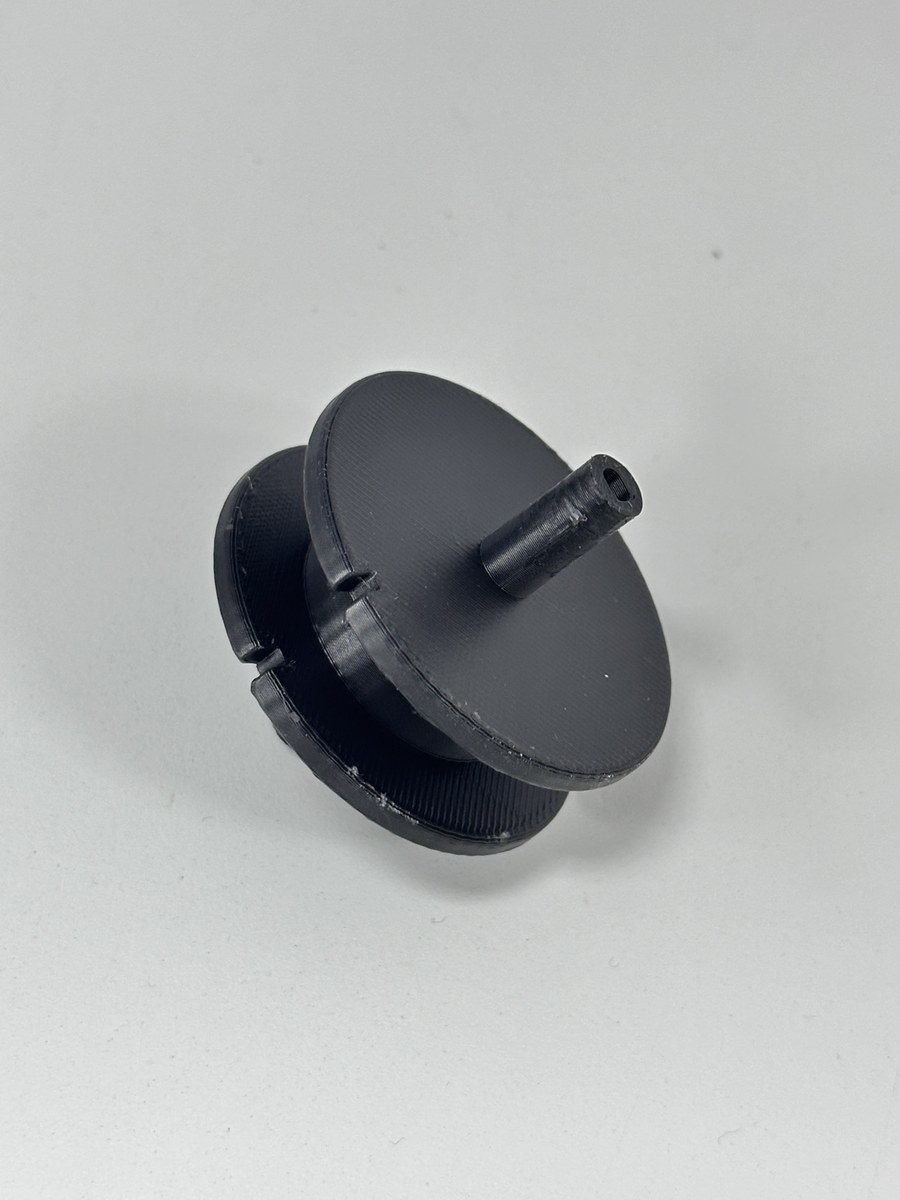
Braked Pulley
The 3D-printed braked pulley that couples to the rotary damper, with a line-anchor post; effective diameter 28 mm.
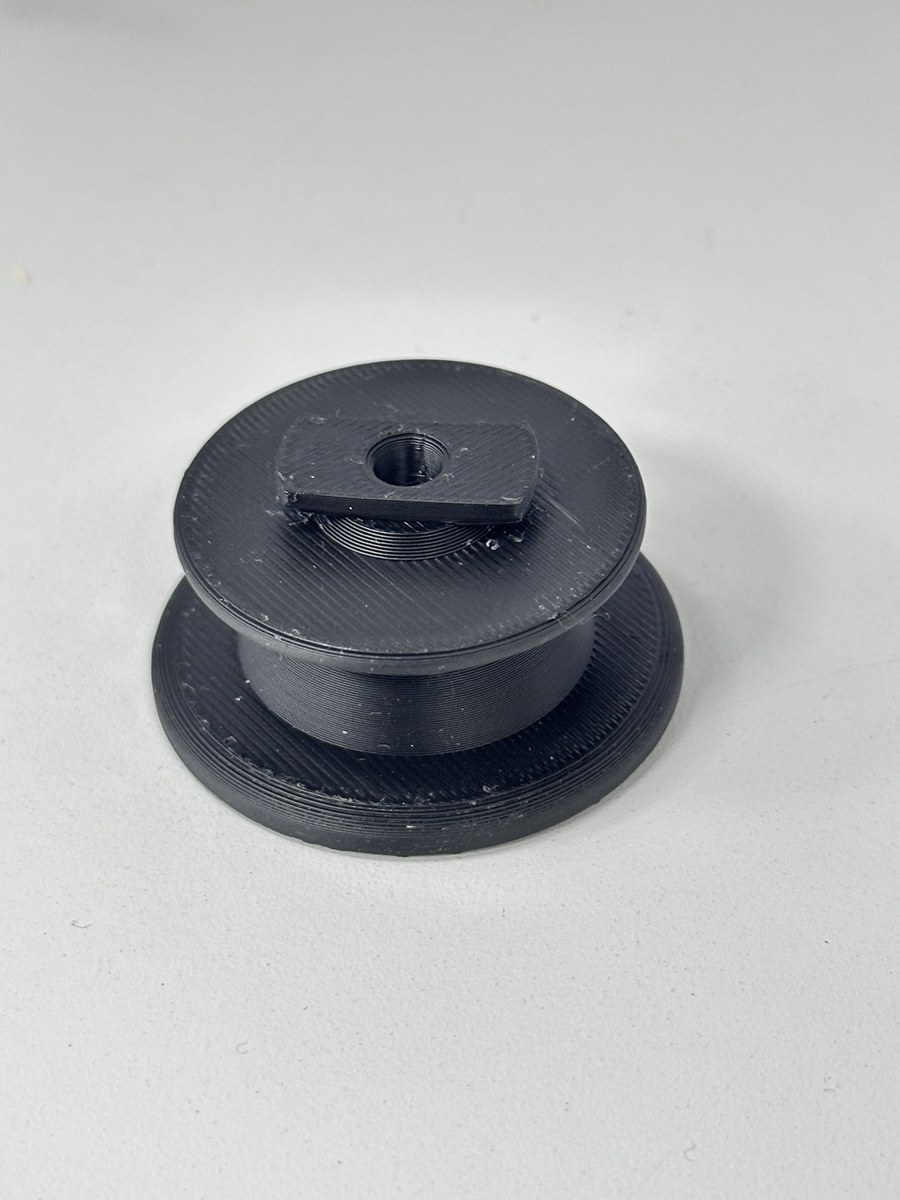
Free-Fall Spool
The free-fall line spool, which stores and releases the first, low-resistance section of the payload line.
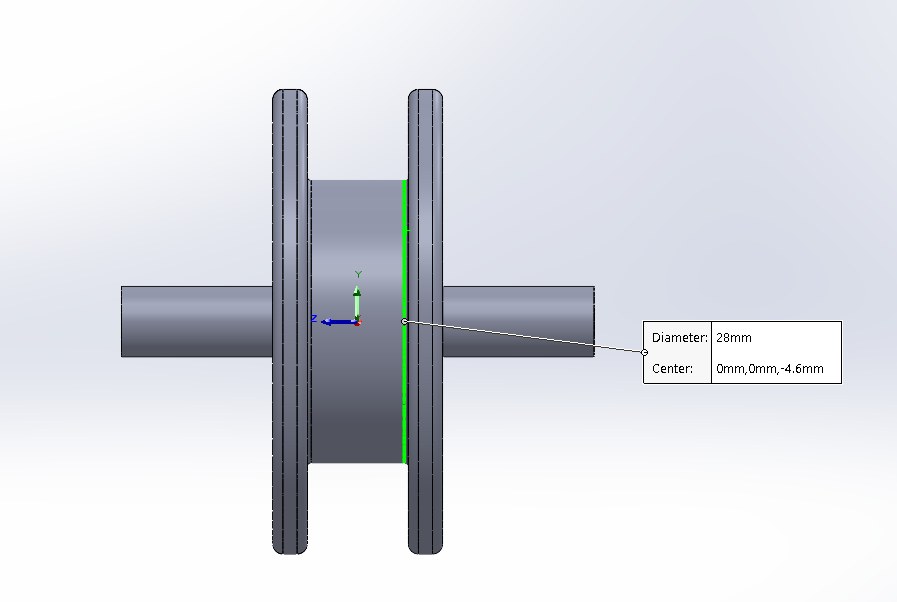
Pulley Diameter Check
SolidWorks measurement confirming the 28 mm effective braked-pulley diameter (14 mm radius) used in the descent calculations.