Building the Payload Manufacturing Workflow
A lot of ASCENT-1's structure never comes from a supplier — it comes off a print bed in our lab. This week we want to document the manufacturing workflow the Payload Systems team has built around three Bambu Lab printers, because it's where a surprising amount of the real engineering happens. If a part on the aircraft isn't a carbon tube or a motor, there is a good chance we printed it: mounts, brackets, housings, and the one-off jigs that hold something still while glue sets.
Each printer has settled into its own role. The enclosed X1-Carbon is the workhorse — it holds the heat the tougher flight-grade materials need, so it prints most of the parts that actually fly. The second enclosed machine, the P1S, takes the overflow whenever the X1 is busy, which is often. The open-frame A1 stays free for quick prototypes we just need in our hands fast. Multi-spool AMS units let a long job run unattended across several spools, which matters when a print takes twelve hours and nobody wants to babysit it overnight; when all three are running and we still need more, we lean on the campus FabLab.
What makes this worth writing about is the rhythm it unlocks. We can model a part in the afternoon, set it printing before heading home, and test-fit it on the airframe the next morning — and when it's wrong, which it usually is the first time, the fix costs a few grams of plastic and a day instead of a week waiting on a machine shop. That freedom to be wrong cheaply, over and over, is exactly why additive manufacturing became the backbone of how we develop ASCENT-1's payload structures.
Figures & Diagrams
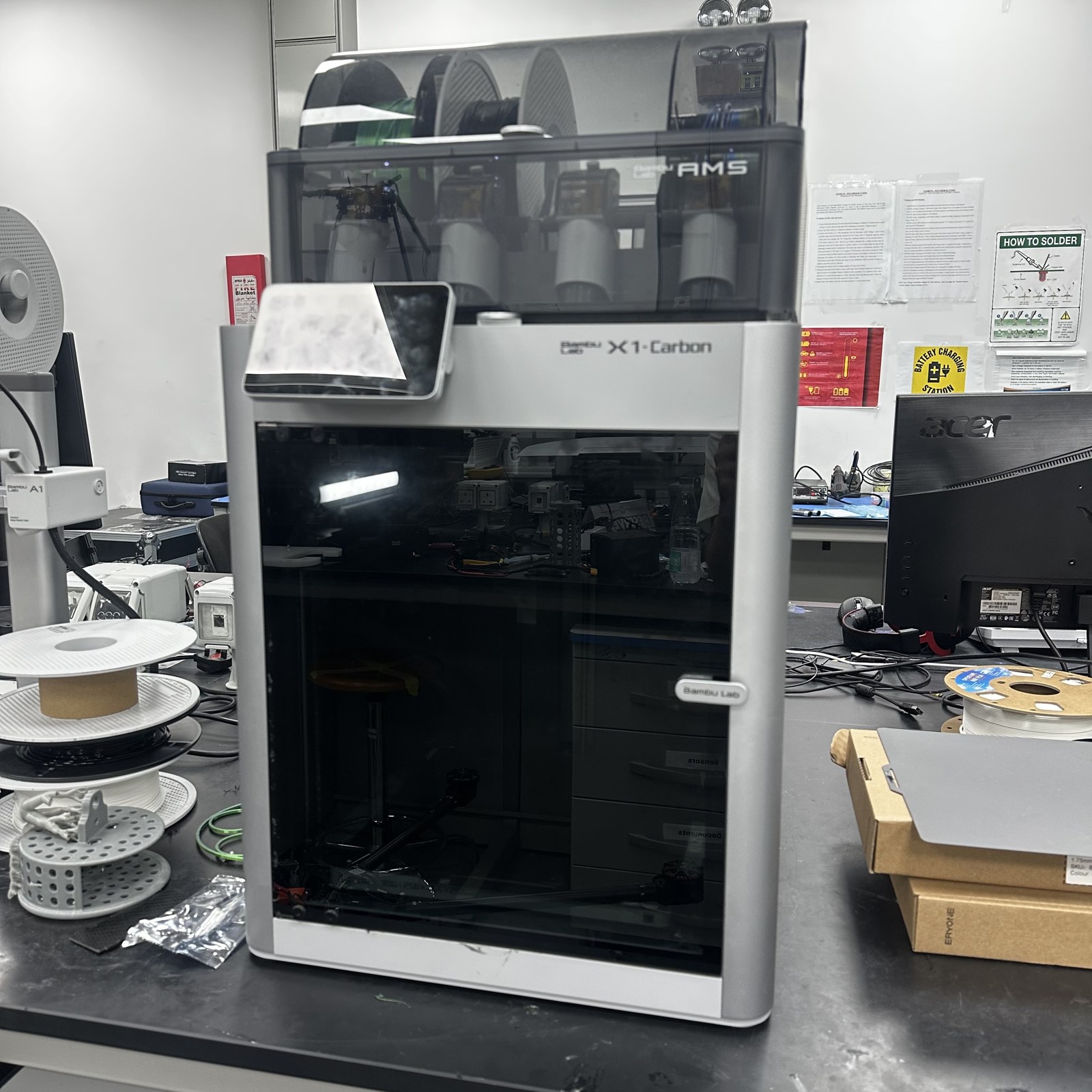
Bambu Lab Printers
Our enclosed Bambu Lab X1-Carbon with its AMS units — the main machine for the parts that fly.
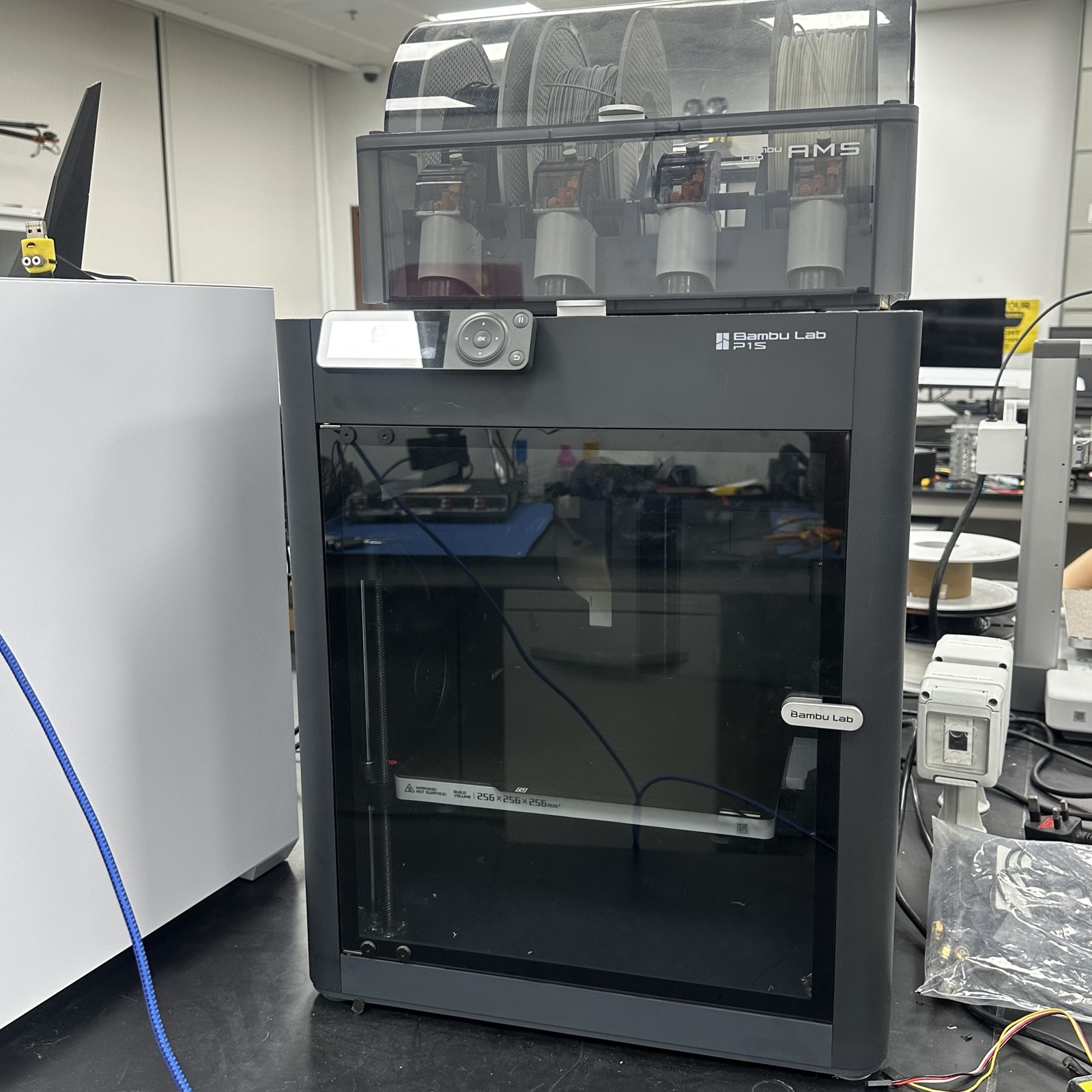
Printing Workspace
The P1S in the lab, picking up whatever the X1-Carbon doesn't have time to print.

Quick Links
Contact Us
About KFUPM ASCENT
KFUPM ASCENT is the official Unmanned Aircraft Systems team of King Fahd University of Petroleum & Minerals, representing the university in the SUAS competition through autonomous aerial systems, computer vision, and advanced aerospace engineering.