
A Passive Two-Stage Drop: Delivering Payload Without a Winch
The SUAS delivery task asks the aircraft to hand a payload — either a small water bottle or an electronic beacon — down to a person on the ground from roughly 50 metres up. The obvious answer is a motor-driven winch, but a powered winch brings a motor, a driver, extra wiring, and a control loop, plus every failure mode that comes with them, all for a single one-shot deployment. We wanted the delivery to be as light and as simple as the mission allows.
So we built a passive two-stage drop instead, and let gravity do the work. A first low-resistance stage lets the payload fall away from the aircraft quickly, and a second braked stage slows it down before it reaches the receiver. One 3D-printed structural frame carries everything — a servo-actuated release latch, a free-fall line spool, a braked pulley, a rotary damper, and the payload line. Worth being precise here: the “free-fall” stage is low-resistance, not an ideal free fall. The payload stays tethered the whole way down, so spool resistance, line friction, aerodynamic drag, and the casing geometry all act on it.
The neat part is that the same mechanism carries both competition payloads. Only the holder and protective casing change between the water-bottle build and the beacon build — the frame, release, spool, pulley, damper, and line are shared. That keeps the two assemblies within a tight, similar mass range, so one braking design has to work for both rather than two mechanisms needing their own tuning.
| Payload | Payload mass | Case mass | Estimated total |
|---|---|---|---|
| Water bottle (200–250 mL) | 200–250 g | 85 g | 285–335 g |
| Electronic beacon | 150 g | 70 g | 220 g |
This first fully assembled prototype — photographed next to its SolidWorks model — is the milestone that turned the concept into hardware carrying both payload variants. With one mechanism to build, test, and trust, the work that followed could focus on the two things that actually decide whether the drop is safe: the braking stage that controls descent speed, and repeated full-assembly drop testing.
Figures & Diagrams
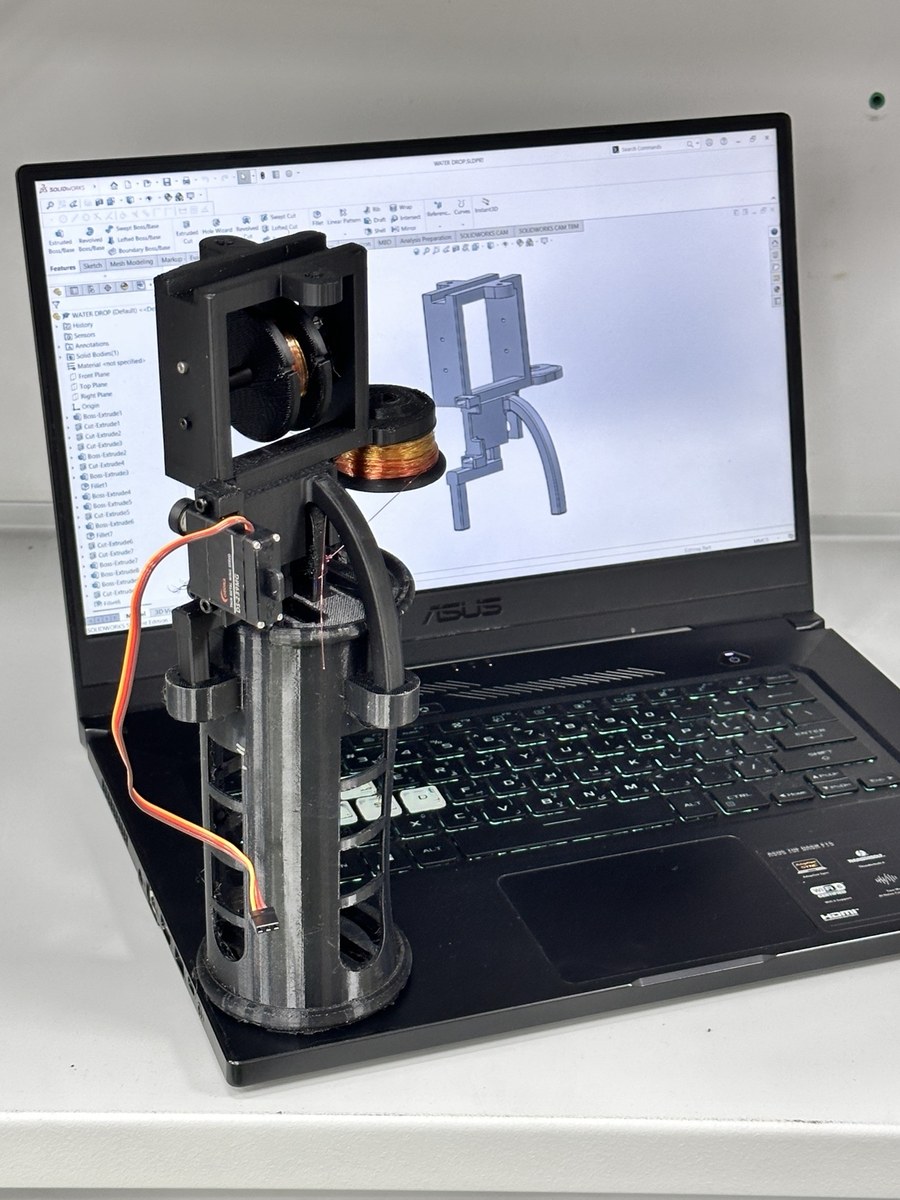
Prototype & CAD
The assembled passive drop mechanism beside its SolidWorks model — 3D-printed frame, dual spools, servo release, and the cylindrical payload cage.
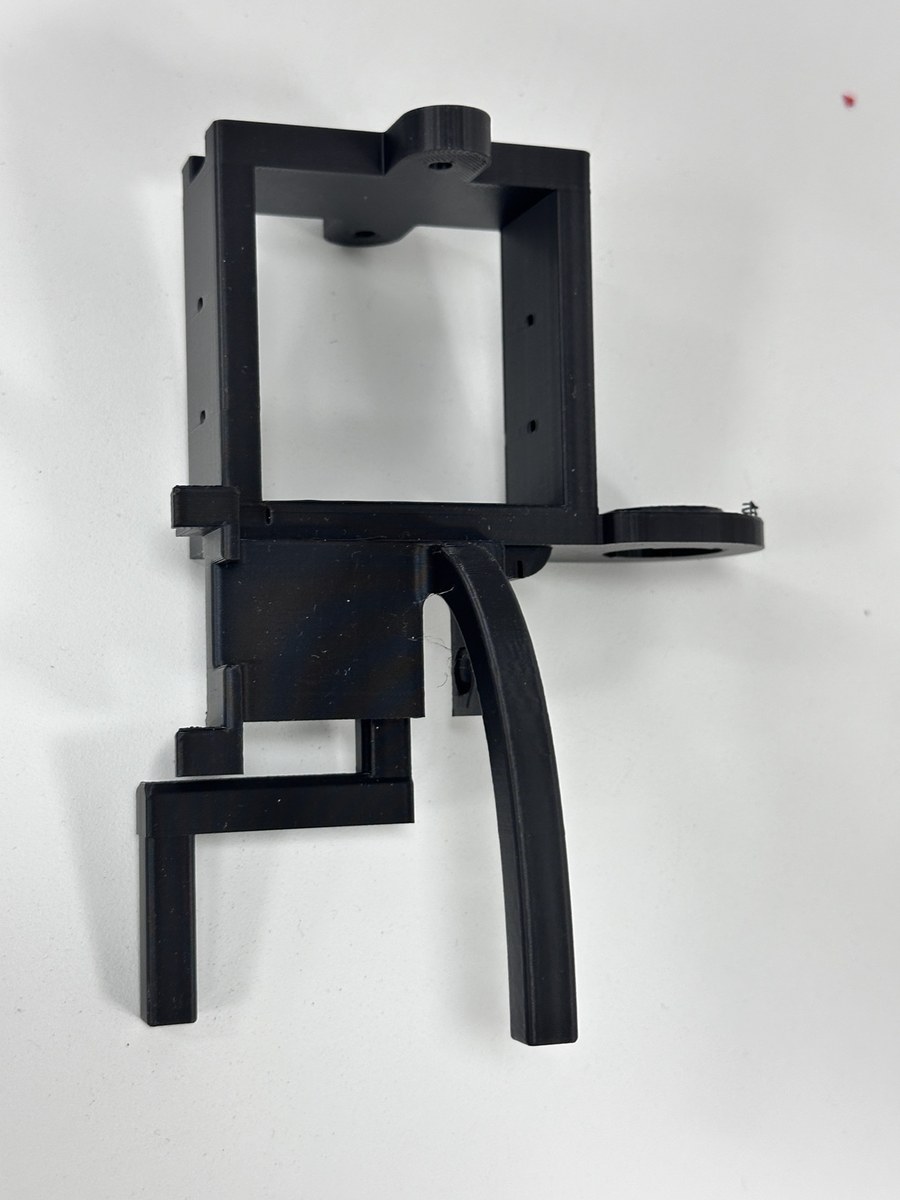
Water-Bottle Frame
The shared structural frame with its pulley mount and curved line guide, printed for the water-bottle configuration.
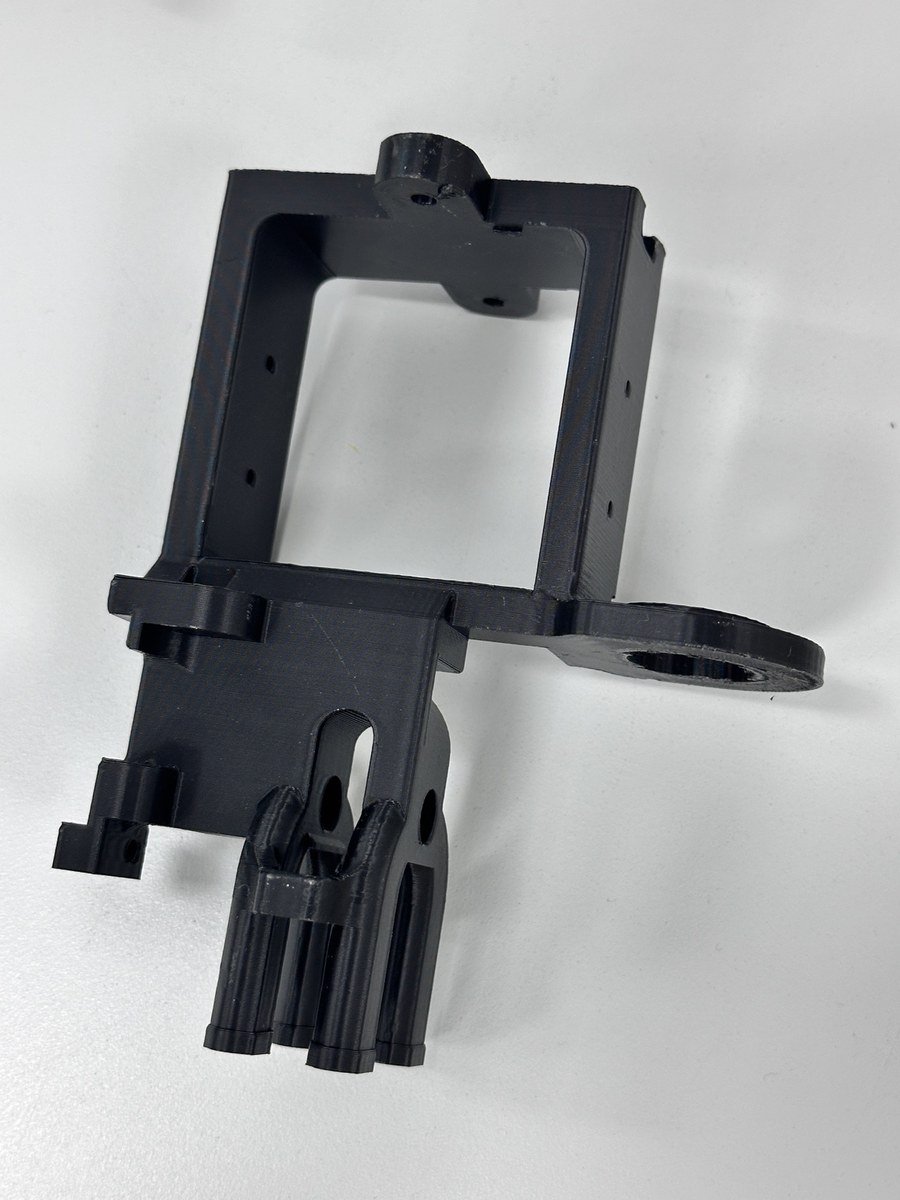
Beacon Frame
The same frame architecture with a compact lower holder shaped around the beacon — only the holder and casing differ between payloads.