
From Pixels to a Target: Full-Mission Integration
This is the milestone where the three layers finally became one autonomous mission. A detection has to answer two different questions before the aircraft will act on it — is it real, and where is it? — and we deliberately keep those separate. The debouncer answers “real” from the pattern of hits and misses; the estimator answers “where” by georeferencing each detection and folding it into a running mean. Only when a target is both confirmed and localized does the state machine promote it and commit.
On commit the controller switches to GUIDED (verified, always) and repositions to the target, declaring arrival inside a 3 m radius. Then LOITER refines the answer: the aircraft orbits the target at 20 m and 4 m/s while fresh geolocation samples accumulate, and it exits on a statistical test rather than a timer — the standard error of the mean must fall below 3 m across at least 30 samples, under a hard time cap so a noisy day cannot hold the mission hostage. Orbiting matters because a stationary hover shares the same lens, GPS, and attitude errors on every sample; moving the camera around the object decorrelates those errors, which is exactly what a mean removes. If the object is not in frame on arrival, a bounded expanding re-acquire orbit finds it before refining.
We rehearsed the exact mission in SITL first — same code, same parameters, same corner coordinates — before the propellers were real, and in full-mission rehearsals the committed target landed about 2 m from the object, inside the arrival radius on the first pass. Those converged coordinates are the deliverable: they feed the object-localization submission and the air-drop targeting, and then the flight hands back to ArduPilot's RTL. It is deliberately boring software — small states, observable transitions, every failure path ending at home — and that is exactly why we trust it heading into the competition.
Figures & Diagrams
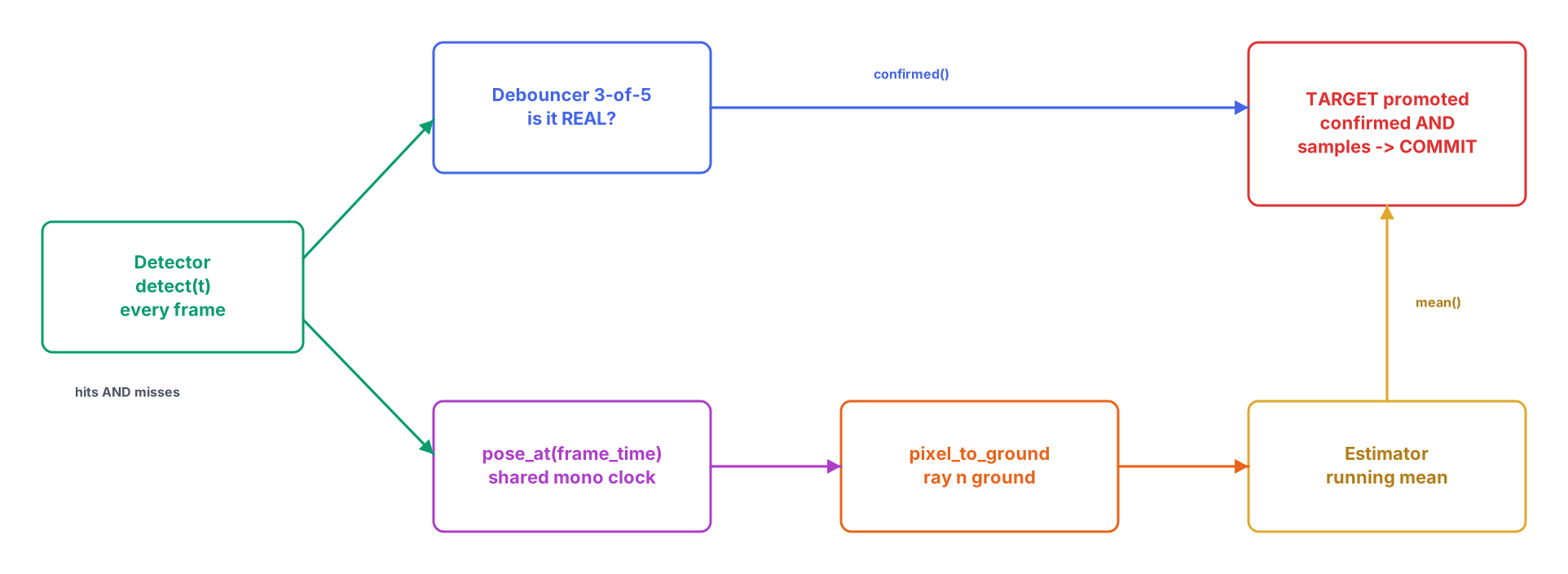
From Pixels to a Target
“Is it real?” (debounce) and “where is it?” (georeference + estimate) run in parallel and must both be satisfied before commit.
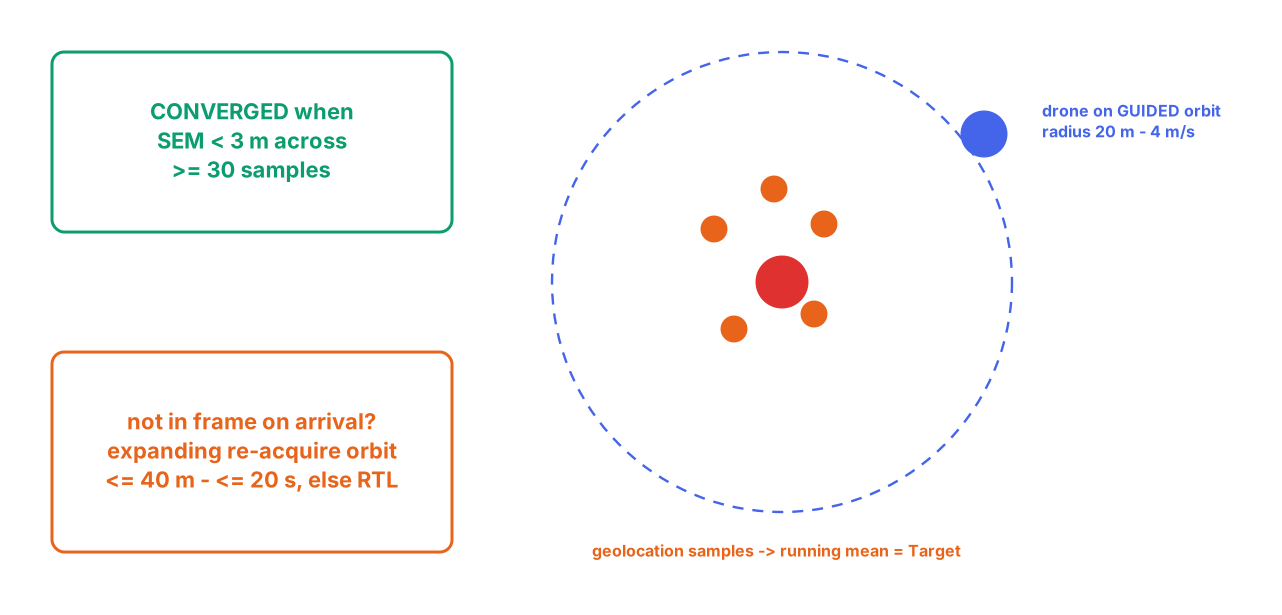
LOITER Refinement
A 20 m GUIDED orbit varies the viewing geometry while samples accumulate; convergence is statistical (SEM < 3 m over ≥ 30 samples).
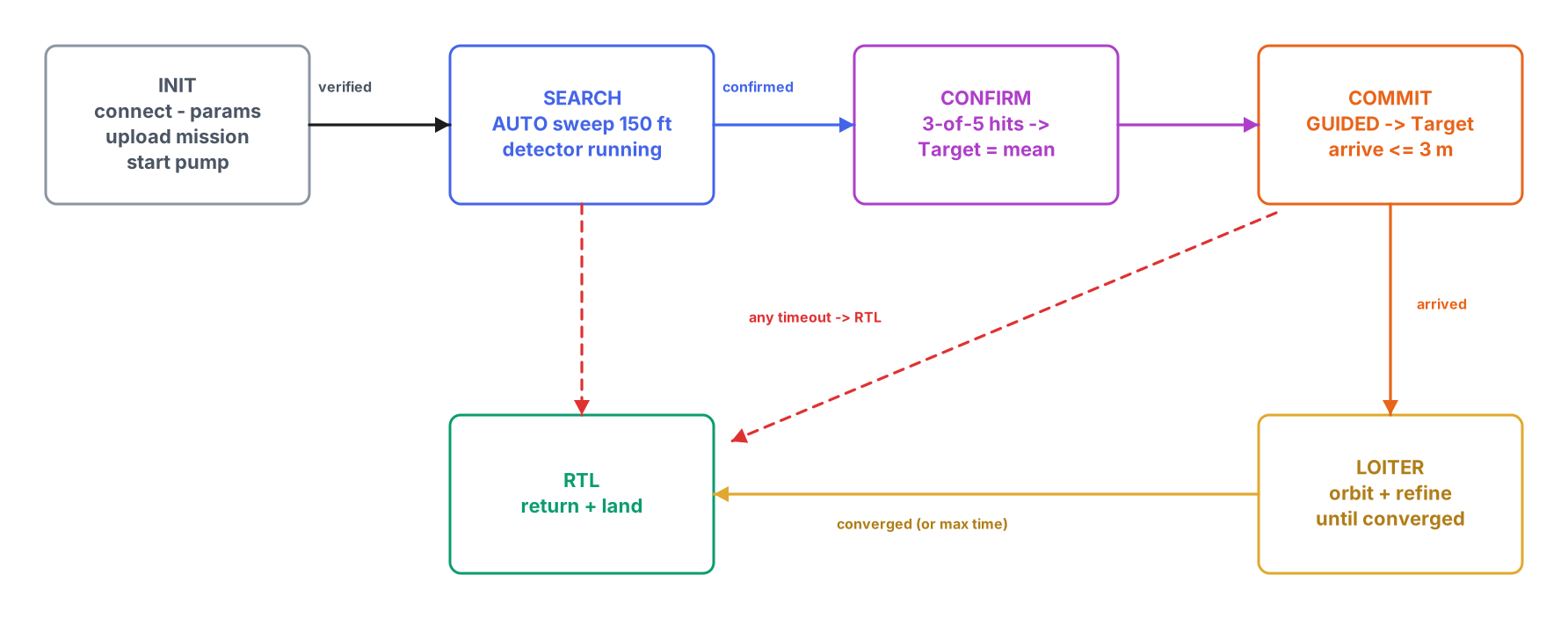
The End-to-End Mission
INIT → SEARCH → CONFIRM → COMMIT → LOITER, with every timeout collapsing to RTL — the map the integrated mission follows.