
The Autonomy Architecture Behind ASCENT-1
With the search simulator behind us, this summer the AI & Communication team started turning research into a real autonomy stack that flies on ASCENT-1. The shape of it is simple to describe: a Jetson Orin Nano runs perception and mission logic, a Cube Orange+ running ArduCopter owns flight, and everything the two say to each other travels over a single dedicated MAVLink2 serial link. The camera feeds the Jetson; the safety pilot watches live video over a Herelink controller; and a Mission Planner laptop supervises telemetry over a long-range 900 MHz radio. Four radios and buses coexist on the airframe, each with exactly one job.
On top of that hardware sits the part that actually makes decisions: a small, explicit mission state machine. The aircraft moves INIT → SEARCH → CONFIRM → COMMIT → LOITER → RTL, and the rule we kept coming back to is that no state is entered without verified preconditions — the mission is confirmed stored before AUTO, a mode change is confirmed before we act on it, a target is promoted only after it is both confirmed and localized. Just as important, every failure path collapses to return-to-launch, so a timeout or a dead process always ends with the drone flying itself home.
The next few posts break this stack open one layer at a time — the MAVLink bridge that keeps the two computers honest, the perception pipeline that sees the ground at 150 feet, and the search logic that turns a camera detection into GPS coordinates. This one is the map: how the pieces connect, and the two ideas — verify before you transition, and always have a safe exit — that run through all of it.
Figures & Diagrams
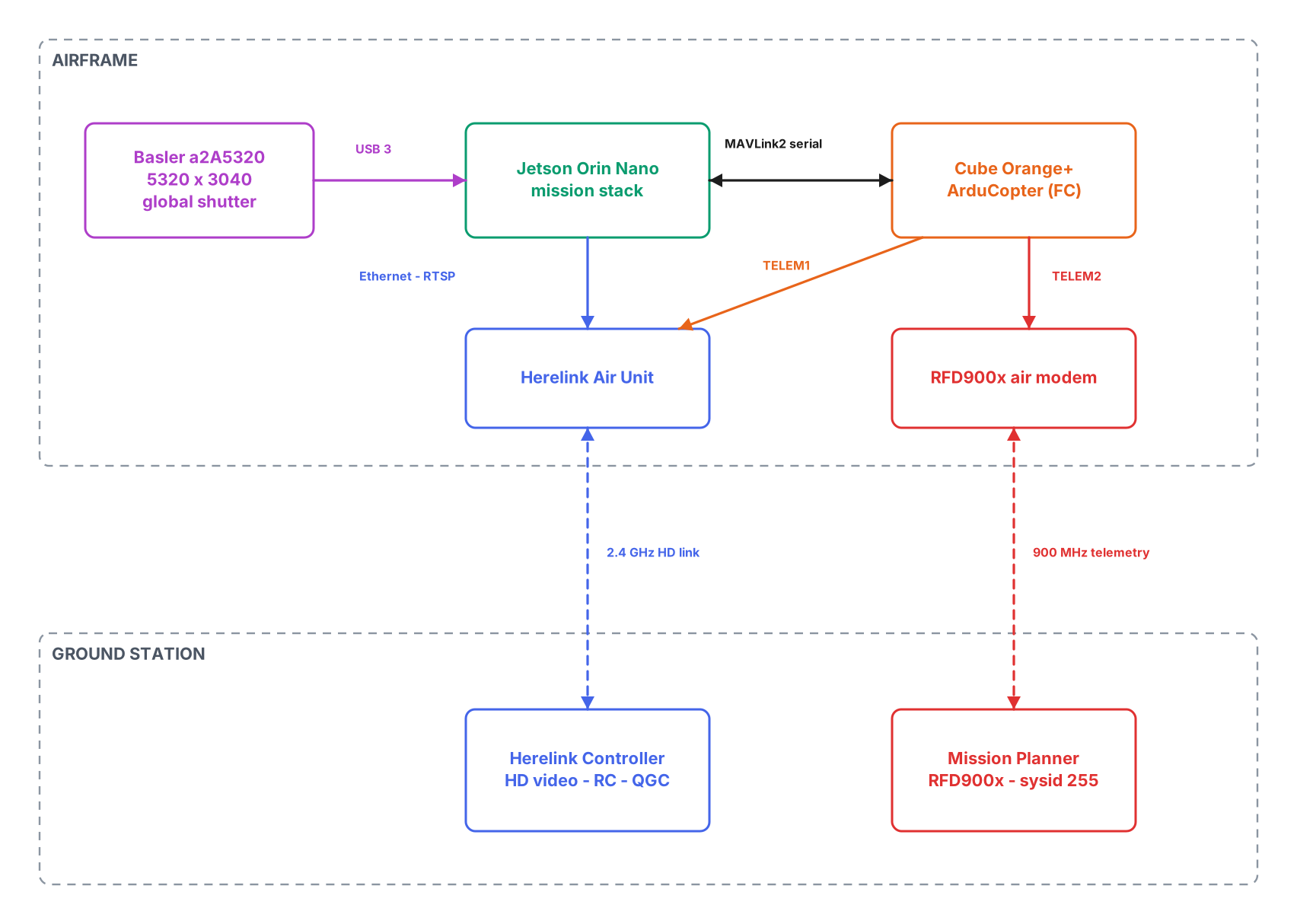
Link Topology
Autonomy rides a dedicated Jetson ↔ Cube Orange+ serial link; video goes Jetson → Herelink over Ethernet, while the pilot and Mission Planner supervise over the HD link and a 900 MHz radio.
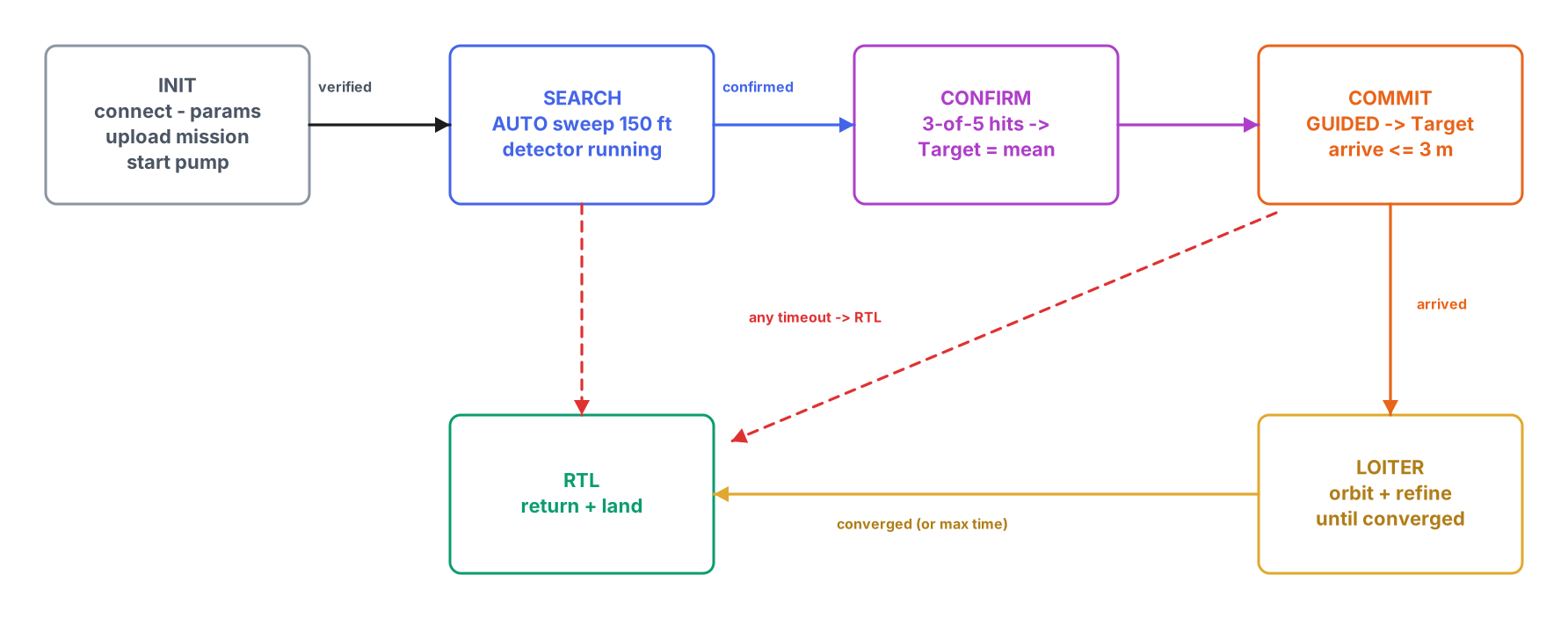
Mission State Machine
The happy path runs left to right — INIT → SEARCH → CONFIRM → COMMIT → LOITER — and every timeout collapses to RTL.